EN
EN



Fiber Laser Marking Machine vs CO2: Detailed Comparison
Choosing between a fiber laser marking machine and CO2 laser technology is one of the most critical decisions manufacturers face when selecting precision marking equipment. Both technologies have dominated industrial marking applications for years, yet they operate on fundamentally different principles and serve distinct material types. Understanding the key differences between a fiber laser marking machine and CO2 systems helps industrial buyers make informed decisions that align with their production requirements, material specifications, and long-term operational costs. This detailed comparison examines the technical foundations, performance characteristics, material compatibility, and economic factors that separate these two marking technologies.
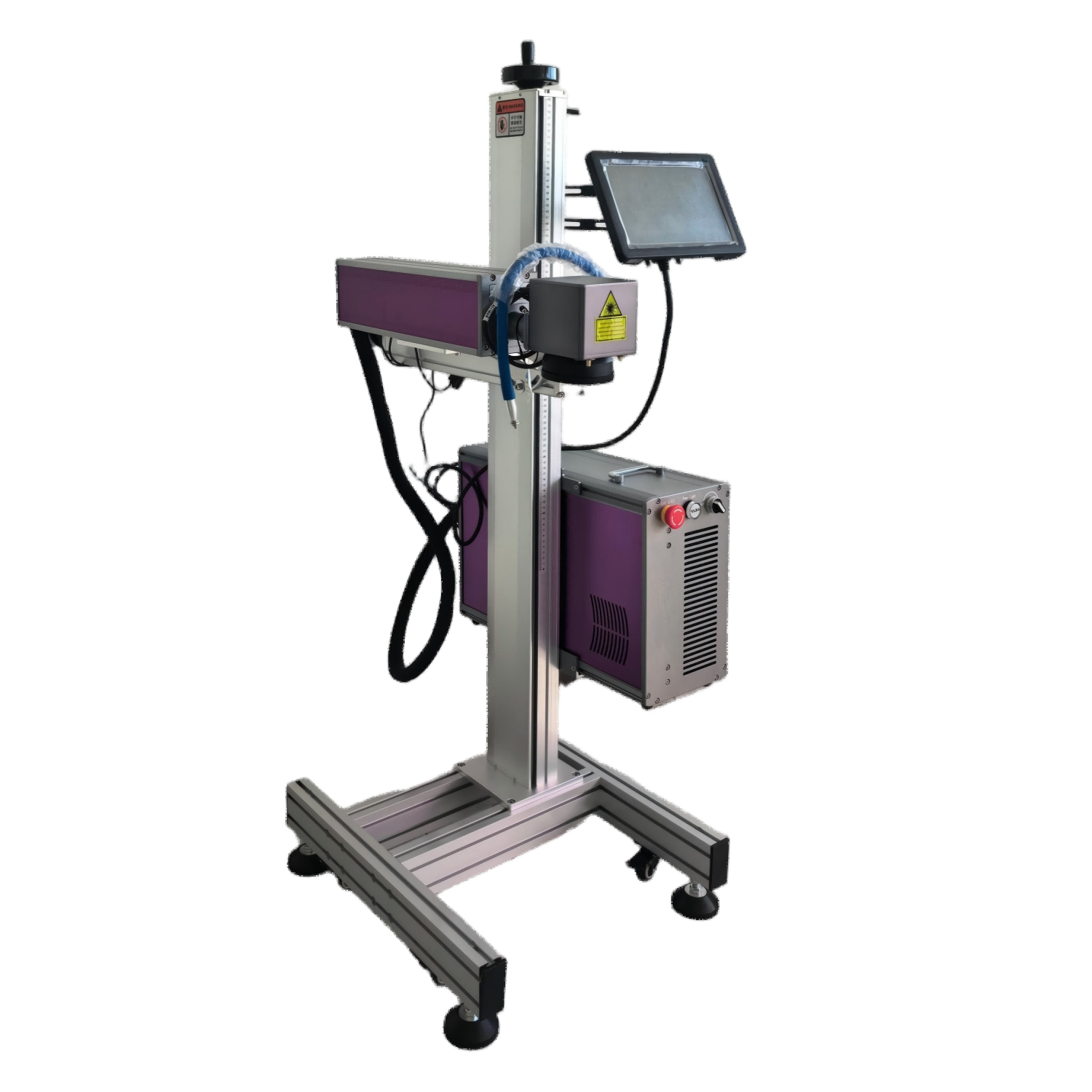
A fiber laser marking machine uses solid-state laser technology to generate markings on materials by focusing a concentrated beam onto surfaces. CO2 laser marking systems, by contrast, employ gas-based laser technology operating at different wavelengths. The fundamental distinction between these technologies determines which materials each can effectively mark, the speed of marking operations, maintenance requirements, and overall system reliability. Industrial facilities rely on this knowledge to select equipment that maximizes production efficiency while delivering consistent mark quality across production batches.
How Fiber Laser Marking Machine Technology Works
Solid-State Laser Beam Generation
A fiber laser marking machine generates its beam through a fiber-optic cable containing rare-earth elements that amplify light when energized. This fiber laser marking machine design creates a highly concentrated beam with exceptional brightness and focus capability. The beam wavelength of a fiber laser marking machine operates in the near-infrared spectrum, typically around 1064 nanometers, which enables deep penetration into metallic and some polymer surfaces. The compact design of a fiber laser marking machine allows for rapid scanning and precise positioning, delivering marks with micron-level accuracy. Modern fiber laser marking machine systems can operate at exceptionally high speeds, often completing complex marks in seconds rather than minutes.
Wavelength and Material Interaction
The wavelength of a fiber laser marking machine is absorbed efficiently by metals, making a fiber laser marking machine ideal for stainless steel, aluminum, brass, and titanium applications. This fiber laser marking machine wavelength creates thermal interaction with metallic surfaces, resulting in permanent discoloration or engraving. A fiber laser marking machine operates through photochemical and photothermal effects that bond mark information into material structure. Unlike surface-level marking, a fiber laser marking machine creates marks resistant to wear, chemical exposure, and industrial handling. The precision wavelength of a fiber laser marking machine enables detailed marking of small components and intricate patterns without material degradation.
Understanding CO2 Laser Marking Technology
Gas-Based Laser Operation
CO2 laser marking systems use a gas mixture including carbon dioxide, nitrogen, and helium excited by electrical discharge to generate marking beams. These systems produce infrared radiation at 10.6 micrometers, a fundamentally different wavelength compared to a fiber laser marking machine. CO2 technology achieves lower power efficiency than fiber systems but excels at marking organic materials including wood, plastics, leather, and ceramics. CO2 laser marking systems require larger physical footprints and typically need more frequent maintenance due to gas mixture management. The wavelength characteristics of CO2 systems result in different material absorption patterns than a fiber laser marking machine, making material selection critical for CO2 applications.
Surface and Engraving Capability
CO2 laser marking systems create surface-level marks through vaporization and ablation of material layers. These systems excel at producing high-contrast marks on non-metallic materials where a fiber laser marking machine would be ineffective. CO2 technology enables deep engraving capabilities on wood and acrylic, creating dimensional markings with aesthetic appeal. However, CO2 systems cannot effectively mark anodized aluminum or bare metal surfaces, limiting their industrial applications. The engraving depth from CO2 systems provides differentiated marking solutions from a fiber laser marking machine for specific material categories.
Material Compatibility and Industrial Applications
Metals and Fiber Laser Marking Machine Advantages
Industrial facilities marking metal components benefit significantly from a fiber laser marking machine due to its superior wavelength absorption in metallic surfaces. A fiber laser marking machine creates permanent marks on stainless steel without surface degradation, ideal for medical device manufacturing and aerospace applications. Automotive suppliers rely on a fiber laser marking machine for VIN numbers, part identification, and traceability requirements. A fiber laser marking machine marks anodized aluminum with superior clarity compared to CO2 alternatives. The precision of a fiber laser marking machine enables detailed marking of miniaturized components in electronics manufacturing. Jewelry manufacturers appreciate a fiber laser marking machine for hallmark creation and quality assurance marking without affecting material properties.
Non-Metallic Materials and CO2 Advantages
Industries processing wood, leather, textiles, and organic materials find CO2 technology superior because CO2 systems vaporize and ablate these materials effectively. Wood crafting businesses produce detailed artistic markings using CO2 technology where a fiber laser marking machine lacks effectiveness. Plastic component manufacturers, particularly those creating decorative markings or brand logos, often prefer CO2 systems for material compatibility. Rubber and cork materials respond well to CO2 laser marking but resist marking from a fiber laser marking machine. Glass and ceramic producers use CO2 technology for permanent surface marking in applications where a fiber laser marking machine penetration would cause cracking.
Economic and Operational Considerations
Initial Investment and Operating Costs
A fiber laser marking machine typically requires higher initial capital investment than comparable CO2 systems, though operating costs favor fiber technology substantially. Electricity consumption from a fiber laser marking machine averages 20-30 percent of CO2 system consumption for equivalent marking output. A fiber laser marking machine operates with minimal consumable replacement needs, while CO2 systems require periodic gas mixture replenishment and mirror realignment. Long-term cost analysis often favors a fiber laser marking machine despite premium upfront pricing due to reduced operational expenses. Five-year total cost of ownership typically proves lower for a fiber laser marking machine in high-volume marking operations.
Maintenance Requirements and Reliability
A fiber laser marking machine requires minimal maintenance beyond routine cleaning and optical alignment verification. CO2 laser systems demand more intensive maintenance including gas mixture monitoring, tube replacement every 2000-5000 operating hours, and mirror cleaning protocols. A fiber laser marking machine offers extended operational lifespan, often exceeding 100,000 operating hours before performance degradation. CO2 systems typically provide 10,000-30,000 operating hours before requiring tube replacement and associated downtime. Manufacturers prioritizing production continuity and reduced maintenance overhead increasingly choose a fiber laser marking machine for reliability advantages.
Performance Characteristics and Marking Quality
Speed and Precision Capabilities
A fiber laser marking machine achieves scanning speeds of 7000 millimeters per second, substantially faster than CO2 systems limited to 2000-3000 millimeters per second. The focusing capability of a fiber laser marking machine enables marking resolution under 0.1 millimeters, superior to CO2 alternatives. A fiber laser marking machine produces consistent mark quality across extended production runs without performance drift. High-speed scanning from a fiber laser marking machine enables marking complex barcode patterns and serial numbers rapidly. CO2 systems produce excellent engraving depth but sacrifice speed compared to fiber laser marking machine alternatives.
Mark Permanence and Quality
Marks created by a fiber laser marking machine demonstrate exceptional permanence on metals, resisting chemical exposure and mechanical wear. A fiber laser marking machine creates marks compatible with traceability systems and regulatory compliance requirements. CO2 marking quality depends on material type, with excellent permanence on wood and organic materials but reduced durability on metals. A fiber laser marking machine produces marks unaffected by temperature cycling or environmental stress. Regulatory compliance in aerospace and medical device industries increasingly mandates marks created by a fiber laser marking machine for reliability assurance.
Selecting the Right Technology for Your Needs
Assessment Criteria for Fiber Laser Marking Machine Adoption
Facilities requiring precision metal marking should prioritize a fiber laser marking machine for material compatibility and operational efficiency. High-volume production environments benefit significantly from a fiber laser marking machine speed advantages and reduced per-unit marking costs. Industries operating multiple shift schedules benefit from fiber laser marking machine reliability and minimal maintenance interruptions. Manufacturers facing strict traceability requirements or aerospace/medical certifications should implement a fiber laser marking machine. Environmental considerations favor a fiber laser marking machine due to reduced energy consumption compared to CO2 alternatives.
Scenarios Favoring CO2 Technology
Businesses specializing in wood crafting or leather goods production should evaluate CO2 technology for superior material compatibility. Decorative marking applications on non-metallic materials often justify CO2 investment due to aesthetic capabilities. Industries with lower marking volume may find CO2 systems adequate for material specialization without fiber laser marking machine expense. Custom gift production using organic materials frequently requires CO2 technology capabilities beyond a fiber laser marking machine scope.
FAQ
Can a fiber laser marking machine mark plastic materials effectively?
A fiber laser marking machine can mark some dark plastics including black polyetheylene and polycarbonate but performs inconsistently with transparent or light-colored plastics. CO2 systems excel at plastic marking across all color ranges. For plastic-dominant applications, CO2 technology typically provides superior results compared to a fiber laser marking machine, though dark plastic marking by fiber laser marking machine offers faster processing speeds.
What is the typical lifespan of a fiber laser marking machine compared to CO2 systems?
A fiber laser marking machine typically operates for 100,000 or more hours with minimal degradation, while CO2 tubes require replacement at 10,000-30,000 operating hours. A fiber laser marking machine demonstrates superior longevity and lower lifetime maintenance requirements. CO2 systems may require complete tube replacement costing thousands of dollars, whereas fiber laser marking machine maintenance remains minimal throughout operational lifespan.
Is a fiber laser marking machine suitable for traceability and compliance marking?
A fiber laser marking machine provides superior compliance marking solutions for aerospace, automotive, and medical device applications requiring permanent, readable marks throughout product lifespan. A fiber laser marking machine creates marks resistant to temperature cycling, chemical exposure, and mechanical stress, meeting strict regulatory requirements. CO2 alternatives lack the permanence required for demanding compliance applications, making a fiber laser marking machine the preferred choice for regulated industries.